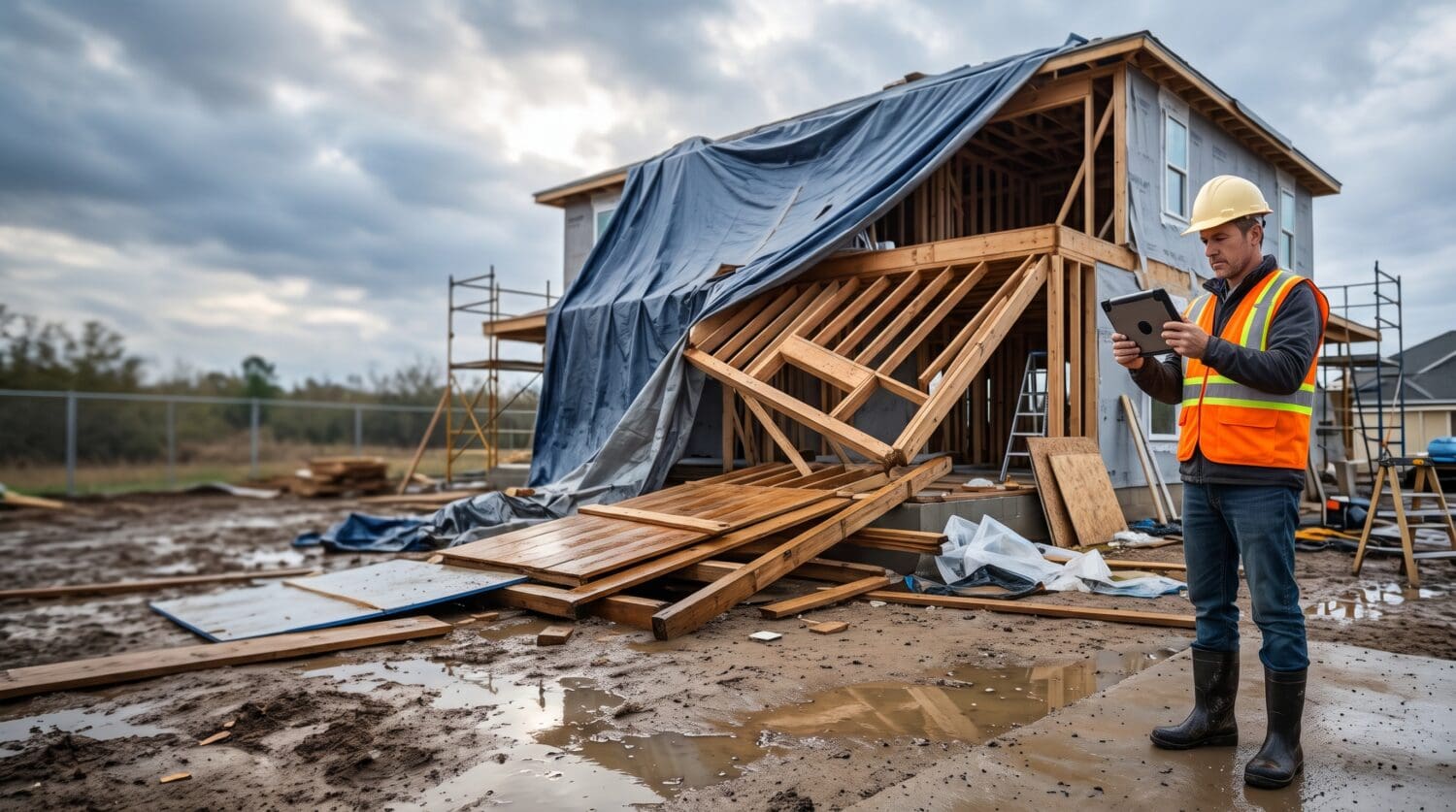
You’ve framed the walls of a new house, and the roof is next on the schedule. Then a night of strong wind and heavy rain hits the site. By morning, part of the frame is down, the lumber is soaked, and the owner wants to know when work can start again. Does builders risk cover storm damage like this, or will your crew have to pay to fix it?
At Contractors Liability Insurance, we help builders find coverage for the risks that come with active projects. On an open jobsite, a broken frame or a flooded trench can mean lost work and new material orders.
First, make the site safe. Then find out what caused the damage and who should report it. We’ll explain storm damage at a construction site, what insurance may pay, and the steps to take before work starts again.
Does Builders Risk Cover Storm Damage?
Yes, builder’s risk insurance can cover storm damage to buildings under construction and insured materials. This often includes damage caused by wind, hail, and lightning. Flooding, rain entering through unfinished openings, and costs from delays may be excluded or need extra coverage.
What the insurer pays will depend on the cause of the damage, your policy’s coverage limits, and any exclusions or deductibles.
What Happens When a Storm Hits a Jobsite?
An open jobsite is more exposed than a finished building. One storm can damage new work and loose materials, but each loss may be treated differently.
What Storm Damage May Be Covered?
Builder’s risk insurance can help pay for damage caused by certain types of storms. Here’s how coverage may apply to common jobsite losses:
- Wind damage: If strong winds pull down new wall framing, the policy may pay for repairs or replacement.
- Hail damage: If hail dents installed roof panels, the damage may be covered under the policy.
- Lightning strikes: Damage caused by lightning, including a fire started by the strike, may be covered.
- Rain damage: If rain soaks drywall or other building materials, coverage may be limited by water damage exclusions or storage rules.
- Flood damage: If floodwater enters a basement or trench, the loss may be excluded unless you’ve arranged extra flood coverage.
The cause of the damage and your policy terms will decide what the insurer pays. Installed materials may also be treated differently from supplies stored on site.
The table isn’t a promise of payment. Installed roof panels and loose panels may be treated differently.
Does Builders Risk Cover Storm Damage to Stored Materials?
It can, if the policy insures those materials in that location. If wind tears through a shed holding windows for a new home, the policy may help replace them.
Materials stored off-site or moved by truck may have separate limits. Our article on builder’s risk and inland marine insurance explains how coverage for goods in transit or storage can differ.
Does Builders Risk Cover Storm Damage From Rain and Flooding?
Rain through an open roof and water flooding a basement may fall under different policy rules.
Rain Through an Open Roof or Wall
Say a remodeling crew removes part of a roof on Friday. Rain arrives that night and soaks the new floor below. The insurer may ask if the water came through an opening that was already there or through one made by a covered wind event.
A policy may limit damage from rain that enters through an unfinished or unprotected opening. Some forms may pay when covered wind damage first makes an opening. Check before you leave a building open to the weather.
Floodwater and Storm Surge
Does builders risk cover storm damage when water rises from outside the site?
Standard builder’s risk coverage may exclude flooding. You may need a flood policy or added flood coverage. Storm surge can fall under flood rules too.
The National Weather Service’s flood guidance explains how heavy rain can collect faster than the ground or rivers can handle it. If runoff fills a trench or flows into a lower level, record where the water came from. This helps the insurer review the right cause of loss.
Hurricanes, Tornadoes, and Hail
A hurricane can bring wind and flooding. Damage from wind may be covered while flood damage is excluded. Tornadoes and hail can harm work before the project is complete.
In areas with high storm risk, some policies limit or exclude wind or hail. They may have a separate hurricane deductible too. Ask your agent how each hazard is handled, rather than treating a storm as one claim with one set of terms.
What Costs Can Builder’s Risk Pay After a Storm?
Builder’s risk can pay to repair or replace insured property after a covered loss. Limits and deductibles affect the payment.
Repairs and Replacement Materials
Suppose wind damages new wall framing and breaks windows waiting to be installed. A covered claim may pay to repair the frame and replace the insured windows. The insurer will need proof of what was damaged and what it will cost to repair.
Your tools may need separate equipment coverage. An older home being remodeled may need extra coverage for the existing structure.
Cleanup and Debris Removal
Some policies pay for debris removal after a covered loss, but limits can apply. Ask before you hire a large cleanup crew. You may need to make the site safe at once, but keep records of what was removed and what you paid. Don’t throw away key evidence if it is safe to keep it.
Project Delays and Extra Costs
A covered storm loss can stop the next trade from coming in. The builder may need to rent a site office for longer or pay extra loan interest. Standard property coverage does not always pay these added costs.
Some policies offer soft costs or delay coverage for certain extra expenses caused by an insured loss. The Oregon Department of Administrative Services’ builder’s risk guidance describes soft costs as added coverage for items such as loan interest and some fees. It is guidance for Oregon state contracts, not a rule for every policy. Check which costs your own policy lists.
Who Pays When Storm Damage Delays the Project?
The owner or general contractor may buy the policy under the contract. Each party should check how its stake in the project is covered.
The contract may say who must secure the site, pay the deductible, and arrange repairs. Those duties are separate from the insurer’s choice to accept a claim. Even if insurance pays for part of the loss, you still need to talk with the owner about the new schedule.
If your job includes work on an existing home, our guide to insurance for residential property owners explains why the owner’s own policy and a construction policy serve different roles.
What Should Contractors Do After Construction Site Storm Damage?
Keep people safe first, then record and report the loss before planning repairs.
Step 1 – Check the Site Is Safe
Keep workers away from loose walls, downed wires, and deep water. A flooded trench or damaged scaffold may need a trained person to check it first. Call emergency services if someone is hurt or there is an urgent danger.
OSHA’s emergency guidance for construction sites covers safe exits and the need to keep workers out until an area is safe. Follow local orders before returning to work.
Step 2 – Record the Damage
Take photos and video when it is safe. Note the date, what was being built, and where the damage took place. Compare what you find with job photos, delivery records, and the work schedule from before the storm.
For a report on construction site damage after a storm, list the ruined materials and any work that must be done again.
Step 3 – Tell the Insurer and Project Owner
Report the loss to the insurer or agent as soon as you can. Share your records and ask how the claim will be reviewed. Tell the owner and other parties named in the contract too.
Ask whether an inspector needs to visit before major repairs. Keep all notes, invoices, and claim numbers in one place. Don’t promise a payment amount before the insurer has made a decision.
Step 4 – Stop More Damage and Plan Repairs
You may need to cover an open roof or move dry materials away from standing water. Make safe temporary repairs where possible, and record what you spend. Don’t put workers at risk to save supplies.
Once the site has been checked, set out the repair plan with the owner and crew. Check whether the extra time will run past your policy end date. Our builder’s risk construction insurance FAQs cover more common questions about project coverage.
How Can You Prepare a Jobsite for the Next Storm?
A few steps taken before bad weather can reduce the work needed later. Plan for the site as it stands today, not how it will look when the building is done.
Secure Work and Materials
Check the forecast before lifting roof sheets or leaving a wall open. Store light materials so wind can’t carry them away. Keep drains clear and move supplies out of low spots where rain can gather. Agree on who will secure each trade’s work before the crews leave.
Check the Policy Before Work Begins
Ask which storms are covered and which water losses are excluded, and whether the materials you store off-site are insured. Check your deductible and policy end date. It is easier to add needed coverage before a storm than after the damage is done.
Our contractor insurance comparison guide can help you see how builders risk fits with other types of business insurance. Builder’s risk protects insured project property; it does not take the place of coverage for employee injuries or claims made by other people.
Be Ready to Deal With the Next Jobsite Storm
So, does builders risk cover storm damage? Often, yes, for covered harm to the work in progress. We’ve looked at wind, hail, water damage, and the steps to take after a loss. Flooding and delay costs need a closer look at the policy.
Before your next job begins, check which storm risks could affect the site and how they are insured. You’ll know who to call and what records to keep if bad weather hits.
At Contractors Liability Insurance, we help builders compare builders risk coverage for the work they do. If you’re unsure about flood or wind coverage, talk to our team before your project starts.
Frequently Asked Questions
Does builders risk cover storm damage before the roof is finished?
It may. Wind damage to insured framing can be covered, but water entering through an open roof may face limits or exclusions. Check the policy before the roof is left open.
Can builder’s risk pay if a hurricane stops work for weeks?
It may pay to repair covered damage. Extra costs from a long delay need their own coverage, such as a soft-cost or delay option. A stop in work with no insured property loss may not qualify.
Does builder’s risk cover flooding at a construction site?
Not always. Standard forms may exclude floods and storm surge. Ask about flood coverage before working in a place where water may rise onto the site.
Can I repair storm damage before the adjuster visits?
You can take safe steps to prevent more loss. Take photos and save receipts first when possible. Speak with the insurer before major repairs, unless urgent work is needed to make the site safe.
Who reports storm damage on a construction project?
The person or business named to handle insurance under the contract should contact the insurer. A contractor who finds damage should tell the project owner and the right policy contact as soon as possible.