
By: Thomas M. Hester
The #1 Online Liability Insurance Company for Contractors. Call for a 5 Minute Quote.

The contracting trades have the most different types of risk of any type of business. The work can vary from the low risk interior trim carpenter to very hazardous work such as high rise window washing. Some contractors have offices that clients can visit. This opens the door for additional liability if clients get hurt on your property. If you are responsible for the accident their medical bills could become your responsibility.
Furthermore if you install products, you could be held liable if the products cause physical harm to your clients.
Get the right protection for the job!
How does General Liability Insurance protect your business from circumstances that are unanticipated? It includes protection as follows:
General Liability Insurance should be considered a back plan when things go wrong. Accidents are unpredictable and happen to even the most conscientious business owners. General Liability coverage protects you against claims brought against your business, as well as claims brought against individuals employed by your business.
General Liability Insurance coverage helps ensure that you can handle these unforeseen expenses without jeopardizing your ability to stay in business. With this coverage, you can sleep peacefully at night knowing you and your employees are protected from uncertainty. You will have the peace of mind that your business will have the money to continue operate even when faced with a costly claim. General Liability Insurance policies also cover the legal fees that can easily put a business in bankruptcy.
The following items are generally covered: attorney fees, witness fees, court expenses, and more.After a lawsuit, General Liability Insurance can be the difference between stying in business or going bankrupt.If you don’t have General Liability Insurance coverage, you would have to pay for those damages out of pocket. As you can imagine, that can really put a dent in not only your business finances but your personal finances as well.
Things can go wrong, prevent that moment. call us at:

Artisan, General, and Specialty contractors have seen spectacular changes within their industry over the past decade. Along with these changes the number of lawsuits against contractors has increased 5 fold. For this reason alone, you must be vigilant in protecting yourself, your business and your family from a potentially catastrophic lawsuit.
The following types of insurance are commonly purchased by most contractors.
Just like everything else in life insurance prices for construction businesses have been increasing. A variety of factors are considered for General Liability Insurance quotes, including policy limits and business operations. A good rule of thumb is that if you are in an average to low risk contractor trade, the amount you will pay will be about 1% of your current revenue. So for example if you have $150,000 in revenue your General Liability Insurance will cost approximate $1,500 per year.
The type of work you perform has the biggest impact on Contractor’s General Liability insurance policy costs. Generally, high risk industries pay higher premiums, while low risk industries enjoy lower rates. If you are in a higher risk trade such as roofing, a General Liability Insurance Policy will cost around 2% to 3% of revenue. So if your revenue is $300,000 your policy will cost around $6,000 per year.
There are a few other factors that also play a part in determining your premium, such as:

Worker’s compensation insurance was established to compensate employees for medical expenses or lost wages as a result of work related injuries or illnesses.If you have employees and you do not have coverage you run the risk of having to defend yourself from a lawsuit.
This obviously can become very expensive if these costs are being paid directly by your business. Furthermore, if they are successful with their lawsuit you will be responsible for paying that as well. You might also find your business in legal trouble with the State. Most States have a legal requirement to have your employees covered with worker’s compensation insurance. With coverage all employees have their compensation claims covered for the time they are unable to work as well. This also provides coverage if they are permanently disabled.
Things can go wrong, prevent that moment. Call us at:
There are additional benefits you as an employer have by having Worker’s Compensation Insurance. It suggests you are a quality employer to attract talented employees. Being perceived as taking care your employee’s needs, you are able to retain quality workers for the long term. As we all are aware retaining and finding good employees is a difficult task.
Due to its benefits and legal requirement, most employers obtain Worker’s Compensation Insurance to protect their business. However, this benefit is not availble to every worker automatically. Some of the requirements needed for an employee to receive compensation coverage benefits are:
The employer must have Worker’s Compensation Insurance Most States make it a requirement for all employers to have Worker’s Compensation coverage. Others are not required to do so. However, any employer can purchase Worker’s Compensation Insurance. If you do not have this coverage, the employee could file a claim against your business.
You must be an employee as defined by federal and state laws An employee is someone hired exclusively by a company either on a full or part time basis. Independent contractors do not qualify as employees. They need to have their own policy if they want coverage. On a side note you need to collect Certificates of Insurance from all the independent contractors you hire showing they have their own Worker’s Compensation Insurance. If you fail to do this any money you paid will be added to your payroll. This can cause a large bill when you are completing your Worker’s Compensation audit.
All injuries must be work related For example, an employee falling of a ladder at a client’s house would be covered. Injuries sustained during other activities that are not related to work are not eligible for Worker’s Compensation coverage.
Sometimes, your employees may suffer from long term effects from exposure to hazardous materials. Claims can also be filed in such situations. Many employeesdo not understand how Worker’s Compensation Insurance works. In the beginning they are usually in the dark. It is only after they talk to family and friends that they do realize they may have a claim.
Signing up for Worker’s Compensation Insurance to protect your employees’ welfare and your business is a complex process. You need to have a knowledgeable experienced agent to guide you through the process.
This will ensure you get the proper coverage you need at the lowest cost. For an overview of the laws around the country, check out our state by state guide to Workers’ Compensation laws AT THIS LINK.
Your employees can have an accident, Call us at:

Workers’ Compensation Insurance is unlike other types of business insurance in that it is regulated differently by every State. In fact, 49 states require all businesses with employees to carry Workers’ Compensation Insurance (the exception is Texas).
While this means that having Workers’ Compensation is necessary for businesses with employees, it also means the cost of this coverage varies significantly from one state to another. The main factors in determining the costs are:
Commercial Vehicle/Auto Insurance is a policy for physical damage and liability coverage for usage not covered by your personal auto policy.
There is a big difference between a personal auto insurance policy and a commercial auto policy. It is of the utmost importance for your business to have this coverage. Commercial Auto Insurance covers a variety of vehicles from automobiles used for business, including company cars, to commercial trucks. Basically, any vehicle that is used for income generating purposes should be insured under your Commercial Auto Insurance.
This policy will also include coverage for employees operating the vehicle. It generally covers trailers depending on the size of the trailer. If it is under 2,000 pounds it is covered for liability. If you have larger trailers and/or want to cover them in case of theft or damage you will need to add them to your policy and request full coverage. Remember tools or other equipment that are stored in these vehicles are not covered from loss by damage or theft.
Your car is an important part of your job, make sure its insured!, Call us at:
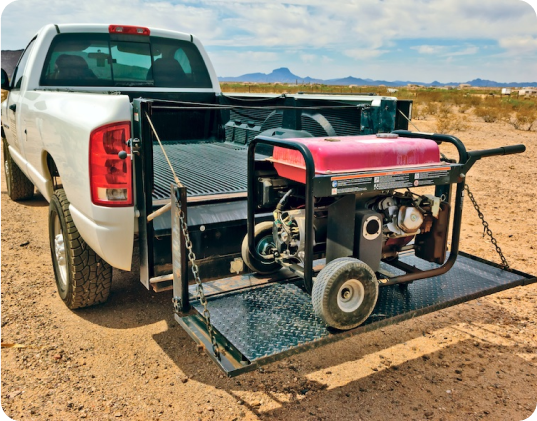
That is a good question, because vehicles used for income producing activities are not covered under your personal auto policy. This is because personal auto policies were not meant for businesses. Commercial Auto Policies are written and rated differently.
As a business often needs the particular coverage found in a Commercial Auto insurance policy. In many cases you will be forced to purchase it for larger jobs to meet contractual requirements. Determining whether your situation requires Commercial Auto coverage can still be confusing. Here is more information and a couple of examples of when you need to get Commercial Auto Insurance.
Commercial vehicle insurance, like your personal auto policy, provides similar coverage such as liability, collision, comprehensive, personal injury protection and uninsured motorist coverage. There are also differences between a Commercial Auto Insurance policy and your personal auto policy that may include coverage, exclusions, and limits.
Commercial vehicle insurance is needed to cover the cars, trucks, and vans used in the operation of your business. If your business has a large fleet of vehicles or you only have one vehicle, you should be properly covered by a Commercial Auto Insurance policy.

The tools and materials or unattached tools and materials transported in your vehicle are not covered by Commercial auto insurance. For that ending you will need Inland Marine insurance.

Commercial Auto Insurance protects businesses against claims arising from accidents involving vehicles used by the business. For small contractors, the average annual cost of commercial vehicle insurance is in the neighborhood of $1,200 per vehicle.
The cost of commercial auto insurance varies widely. It depends upon the number of variables, including the amount and types of vehicles your business uses. A policy that covers just one car will cost much less than a policy with a fleet of 25 trucks and other assorted vehicles. However, most small contractors can expect to pay around $1,200 per vehicle in annual premium.
The type of vehicle you are insuring also plays a significant part in the cost of the premium. Most small contractors insure one vehicle, which is why their average annual premium is $1,200 or less. However, there are many factors that can influence the cost. For example, if you have a large dump truck used in your business the annual policy may be as much as $4,000 per year.
Your car is an important part of your job, make sure its insured!, Call us at:
Almost all contractors use vehicles as part of their profession. There are various different factors affecting the price of commercial vehicle insurance. A well informed contractor will want to understand which factors relate to their business. They will also want know how those factors may affect the premium they pay.
Here are some examples of cost versus risk:
Don’t let the term “Inland Marine” confuse you. Inland Marine Insurance covers products, materials and equipment when transported to or from job sites or while temporarily stored by a third party.
For many businesses, the property insurance provided by your Business Owners Policy (BOP) may be sufficient. We can help you determine whether purchasing Inland Marine Insurance is a good option for your business.
As a contractor or construction professional, your work regularly involves the transport of equipment, tools, and supplies to and from your work site. While your valuable business assets are in transit, Inland Marine Insurance ensures their replacement should an accident, theft, or loss happen along the way. It also include tools, that you or your employees take with them when they perform a job. You can add Inland Marine coverage to your Property Insurance policy if it is not already included.
Your inland marine busines is an important part of your job, make sure its insured!, Call us at:

Ask your agent to determine what coverage is appropriate for your contracting business needs. Contractors & Construction Professionals: Inland Marine Coverage Contractors have many business assets that are not only valuable, but also necessary for their work. No matter the location be it a work truck, job site, or storage location Inland Marine Insurance covers equipment and tools that are stolen, damaged, or lost.
When shopping for coverage for your construction contracting business, keep the following in mind. If you your truck was stolen or a job site was broken into or destroyed by fire causing a loss to your tools and equipment would you have enough funds available to repurchase the lost items? Your tools are your livelihood without them you would not be able to stay in business very long.
The cost of an Inland Marine Insurance policy varies, but most small contractors will pay around $800 per year in premiums. The final cost will depend on a number of factors, such as the size of your business, the industry you are in, how much protection you need, and the amount of equipment and tools you want covered.
Here are the primary factors affecting the cost of inland marine insurance:
The best way to accurately estimate the cost of Inland Marine Insurance is to get a quote from CONTRACTORSLIABILITY.COM. When purchasing Inland Marine Insurance, be sure to review the policy with the insurance representative to assure complete coverage.
There are two main ways for an independent contractor to get General Liability Insurance coverage:
The prime contractor can add you to their General Liability policy as an additional insured. This will allow you to work while being covered under their policy. It is more expensive for the prime contractor to include you in their policy as an additional insured. They may decide to add you, for a number of reasons to include you depending on the situation.Some of the reasons are to make sure you actually have coverage.
Also, they may want to make sure you have the coverage types and policy limits they need or are required to have. It is also more convenient for them as they know you have coverage they need, as you are well aware the price for convenience is usually higher.
You can get your own General Liability policy to show a customer or prime contractor that you have insurance coverage you request a certificate of insurance from your insurance company. This option is usually cheaper.
Both options provide protection if either you or the prime contractor is faced with a lawsuit over third party bodily injury or property damage.
Get covered for future accidents to third parties, Call us at:

An additional insured is anyone besides a policyholder who is covered by an insurance policy. An additional insured has less protection than the policyholder, but you still have important coverage, such as:
Only policy owners can add an additional insured to an insurance policy. So, it is the responsibility of the policy owner to add additional insureds.
Independent contractors in the contracts they have signed will in most cases have insurance obligations that they have to fulfill. These contract requirements will tell the independent contractor what they need insurance wise.
The price of Independent contractor insurance varies greatly across trades. Ask your ContractorsLiability.com agent about the cost and benefits of getting your own insurance.
You may not need insurance, if you are covered under the General Contractor’s policy. However, if you injure someone else, or make any kind of mistake that damages a third party property, having your own General Liability Insurance Policy can add extra protection for you. As you are well aware when a lawsuit is filed everyone gets sued.
Furthermore, many companies or primary contractors will not work with you if you are not adequately covered. In fact, almost all General Contractors will require subcontractors show proof of insurance. A subcontractor who is not insured can leave the primary contractor vulnerable to lawsuits and other expenses. It is important for subcontractors to consider several different types of insurance coverage such as:

You should have General Liability Insurance for your business. This insurance will cover situations including property damage or injuries, which can happen. There is a high probability that the General Liability Insurance of whoever hired you will not extend to a subcontractor. Also, potential clients may not want to hire you unless you have your own subcontractor liability insurance. This is typically true when you work with smaller companies or independent contractors who want to use your skills for a job.
If you work as a handyman, chances are you know the hazards that handymen take. The Handyman’s type of work is a jack of all trades. Your jobs can range from painting, door hanging, simple electrical fixes and small plumbing jobs. This while good also means that you are responsible for all those risks if something goes wrong as well. So if you are a handyman you may ask yourself, what type of Handyman insurance coverage do you need?
You might have been told previously that to get a particular job, you would need proof of coverage or proof of insurance. A smart homeowner may ask to see your proof of coverage before you start any work. If you have this coverage in place it is a best practice to supply the homeowner with proof of insurance with your estimate. This in many cases will separate you from your competitors who may not have insurance. As a result you should get more work even if your prices may be higher.
Get covered for future accidents to third parties, Call us at:

You know that insurance can help if someone or something is injured or damaged. You know there is insurance that covers replacement of stolen tools and the vehicles you use in the business. You know that a small handyman business such as yourself does not need a vast insurance quote. Most of you will only need to get basic Handyman General Liability Insurance.
Obtaining Handyman Insurance is easier than you think. Your knowledgeable agent at ContractorsLiability.com can make sure you are not paying for more coverage than you need. In most handyman businesses, you are the only employee as well as the business owner. The only thing you really need is Handyman General Liability Coverage.
As it turns out, in general, you simply need Handyman General Liability insurance. This insurance policy will cover you from bodily injury to third parties, legal fees, judgments, damage to property, and medical expenses among other things. This will cover you in most of the situations that could arise on job sites and as a business owner. When looking at exactly what you will need, you have many coverage options, but typically Handyman Liability Insurance will be best with the following details:
$1,000,000 liability coverage per claim $2,000,000 per year aggregate coverage limit $1,000 deductible.
What this means is that if you file an insurance claim, your Handyman General Liability Insurance will cover up to $1 million per incident, with a maximum of $2 million per year. While you might think there is no way you could do that much damage to a home or business owners place, but it is always a possibility. We do not recommend limits of $300,000 or $500,000. The reason being is that the money you would be saving is generally less than $100 for these lower limits. In the event of a major loss you will be kicking yourself for not purchasing the higher limits.
Of course, you know that general liability coverage is not the only insurance available. Handyman General Liability is the basic insurance you should have. You can add a myriad of options insurance options such as Commercial Auto policies, Workers Compensation, Property Insurance, and even Inland Marine insurance that covers your tools and equipment. These are the types of insurance you need to look into as a Handyman.
When it comes to your vehicle, you might think your personal insurance will cover you. The truth is that if you are in a work related accident with your vehicle the insurance company may deny the claim. We suggest buying commercial vehicle insurance, it may be a little bit more expensive than your personal auto policy but you will get at least the 2 following benefits: You know you will be covered in a work related accident. Also, as it is a business expense you can write it off on your income taxes unlike personal vehicle insurance. It is best to talk to your insurance agent about your specific business as that will change the coverage you need and the insurance cost you will pay.
You can expect to pay less than $1000 per year for General Handyman liability Insurance. This translates to less than $90 a month for protection and peace of mind. The actual premium will depend on what State your business is located in, the types of services you offer, your total revenue, and some other factors. These costs should be passed on to your clients. If you have 10 jobs a month simply by adding $10 to every job will cover the cost of your Handyman General Liability Insurance. I am absolutely positive that if you asked every one of your customers would you rather pay $10 less and have a Handyman with no insurance do the job or pay $10 more to hire a Handyman with a General Liability Policy with a $1 million in coverage, 99% of them would chose the Insured Handyman.
This again would be a Handyman General Liability Policy that has $1,000,000 liability coverage per claim, $2,000,000 per year aggregate coverage limit, and a $1,000 deductible.
Handyman insurance can come in a wide variety of insurance policies. You can get anything from a Handyman General Liability Insurance policy to Workers Compensation, Commercial Vehicle Insurance or Inland Marine Insurance. In general, you a business owner of a single person handyman business, you probably can get by with just general liability insurance. It will cover everything from property damage, settlements, legal fees and judgments to damage to property, bodily injury to third parties and more.
You have many coverage options. The best starting place remains to be a Handyman General Liability Policy that has $1,000,000 liability coverage per claim, $2,000,000 per year aggregate coverage limit, and a $1,000 deductible. With this policy, you will also have the option to add a commercial vehicle insurance. You will still need your own Health Insurance policy. Your business will be reasonably covered with just those two policies.
Permit bonds are required by certain governmental entities to allow various types of contractors (i.e. Electricians, Plumbers, Roofers etc.) to apply for a permit for a construction project.
In most instances when a permit is required, they also generally require to the contractor to have General Liability Insurance before they issue a contractor a permit to proceed with their construction project.
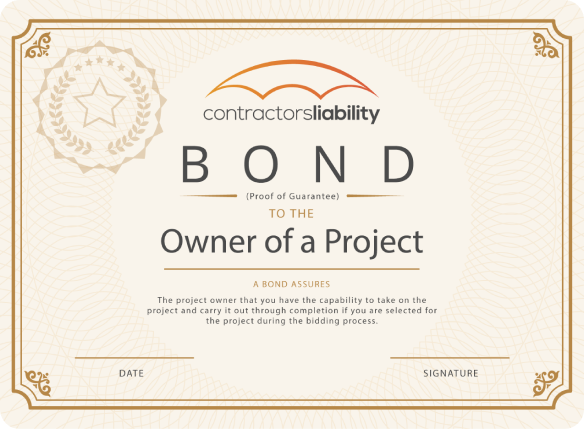
The cost of required permit bonds varies by the amount of the bond required. The typical cost of a permit bond is anywhere from $100 to $250. The cost of this bond varies from State to State. In almost all cases, the cost of the bond is $100. A general rule of thumb is the cost of the bond will be around 1% of the penalty amount. The exceptions being California and Washington where it is around 2% of the penalty amount.
Another major component of the cost of the bond is the credit of the person applying for the bond. In most cases there is no credit check for permit bonds. If there is a credit check required, the price difference for contractors with good credit versus those with bad credit is staggering. Again California and Washington bonds are two of the main States where a credit check is required. An example, is the $12,000 Contractor’s bond for General Contractors in Washington.
A contractor with good credit can obtain this bond for around $200 for the year. On the other hand, a contractor with bad credit will have to pay at least $1,200 a year for the same bond. In certain States some companies do not require a credit check to issue permit bonds, so it is always best to check with the professionals at ContractorsLiability.com for a free quote. Good credit as defined by most bonding companies is a credit score above 700, no bankruptcy in last 7 years. There also can be no unresolved claims against previously issued bonds.
Again, the requirements for these permit bonds vary between $5,000 and $25,000, with $10,000 bonds being the most common. The cost of these bonds are usually $100, but can be slightly more for larger amounts. Additionally, most municipalities have their own bond form that they require. A frequently asked question we get at ContractorsLiability.com is “Do I need to get a new bond for each municipality or can I use the same bond?” The answer is yes you need a new bond for each municipality that requires a bond. There are no blanket bonds that cover every City.
Another major concern that contractors have about getting a permit bond is how long will it take to get processed. In all situations where the contractors credit is “good” as defined above or no credit check is required the bonds can be issued immediately. These permit bonds are in most cases, electronically sealed and can be emailed directly to the contractor for their signature. In some cases, an actual signature and seal is required from the Bond Company and in that case the bond can be delivered the next day via FedEx or regular mail if time allows.

The coverage you need depends on the type of business you are in and the risk associated with it.
The bare minimum you should have is a General Liability Policy that has $1,000,000 liability coverage per claim, $2,000,000 per year aggregate coverage limit, and a $1,000 deductible.
Insurance type
As mentioned above, if you fall into the lower risk category, you may want to consider a Business Owner’s Policy (BOP), which combines General Liability and Property insurance at a cost effective rate.
If you are confused about where to start, either call one of the agents at ContractorsLiability.com or fill out an online quote form. If you are reading this E-Book you are way ahead of the game. If you want more information take a look at SBA’s Five Tips for Buying Business Insurance which includes tips on assessing your risk, shopping around, BOPs, and maintenance of your policy.
When it comes to extra protection and advice, forming your business as an LLC or a corporation will be in your best interest should something happen that is over your insurance coverage limit. Think of it as a back stop if things really go sideways.
This can be great especially for companies that work on costly job sites. Overall, always talk to an attorney. At the end of the day, they’ll be the ones that can tell you exactly what you will need for your situation and business.
Think of your LLC or corporation as bankruptcy insurance. Sure, you can not lose your personal assets but you sure can lose enough for it to be extremely painful.


Are you a General Contractor, Artisan Contractor or the owner of some other type of small business looking for liability insurance?
One thing you may have overlooked is an umbrella insurance policy. All small business owners should consider Business Umbrella Liability Insurance.
We live in a lawsuit happy country. No matter how conscientious and attentive you are, there is always the possibility your business will be sued. You could lose everything if a court rules against you, including your PERSONAL ASSETS like your house, savings and vehicles. This in addition to probably losing your business. Just imagine the pickle you would be in.
No one really expects a catastrophe to strike their business. But every small business is vulnerable to a major catastrophe or a huge lawsuit. Think about some of the devastating losses you have heard about recently and the large settlements that are awarded in courts these days. It is possible these losses could exceed your primary insurance coverage.
The possibilities are mind boggling. The roofer that comes in to patch a leaky roof and ends up burning the facility to the ground. This loss could run into the millions of dollars and unless you have an Umbrella Insurance Policy the loss is coming out of your pocket.
Umbrella insurance is important because it covers these unlikely events. It is not expensive and in certain instances, it could actually save your business and your assets. Umbrella coverage is no longer an afterthought. With a ContractorsLiability.com umbrella policy, you can get up to $10 million of liability protection over and above the limits of other insurance policies you have for your business. ContractorsLiability.com will write umbrella coverage over business liability, auto liability and workers’ compensation. The cost of this peace of mind insurance is astonishingly little. Give one of our agents a call or fill out the online quote form.
Protect your business, which is probably your greatest asset with an Umbrella Insurance Policy. Think of ContractorsLiability.com the same way you would a knowledgeable personal friend. You trust them and they can offer some good advice they know what motivates you, what your weaknesses are, etc. Based on these criteria we can formulate a policy that works best for you, and potentially you alone. Our plan, in this case, is your personalized General Liability Policy with Umbrella Insurance coverage.
ContractorsLiability.com has worked with enough General Contractors, Artisan Builders, Roofers, Plumbers, and Handyman businesses to understand exactly what type of coverage is best for them.
Builders Risk policies are usually one to four percent of the construction cost. It will depend on the type of coverage and exclusions that the policy will have. It is also dependent on the location of the property. Properties near the coast or in areas that have a high risk of wind damage will be significantly higher.
The importance of having a reputable insurance company is that they will expedite your claims. They will be able to assist you in solving any potential claims during the construction process.

Some companies can cover the soft costs of the project. You will need to ask if this is included in your policy. If you want the coverage and it is not included you can ask to include it in your coverage but be aware that this will increase the cost of your Builder’s Risk Insurance premium.
The builder’s risk insurance is part of your project’s soft costs, and even though it will cost you some money, it is better to have it than not having it when is needed.
Additional coverage may be provided for certain situations. Common Builder’s Risk insurance coverage additions include:
It is really important to highlight this additional information that you should know:
Usually, coverage ends when the building is completed or occupied.
The premium for the policy is fully earned. Builders risk insurance unlike most other types of insurance can be purchase in terms of 3 months, 6 months or on annual basis. What the fully earned premium means, is that say for instance you buy a 6 month term policy and the project is done in 5 months you will not be entitled to any refund of premium. It is also important to make sure that if your project is running behind schedule you contact your agent to obtain an extension. If there is a gap in coverage it is very difficult if not impossible to secure other coverage.
According to the SBA the following are Six Key Points to Remember when obtaining Insurance.
The above E-Book is meant as general information and as general policy descriptions to help you understand the different types of coverage. These descriptions do not refer to any specific contract of insurance and they do not modify any definitions, exclusions or any other provision expressly stated in any contracts of insurance. We encourage you to speak to your insurance representative and to read your policy contract to fully understand your coverage. TMH


