
Get contractors insurance for your California business. Find general liability, workers’ compensation, commercial auto, and other coverage for your work, employees, equipment, and projects.
Need help choosing coverage? Call (888) 973-0016 to discuss your insurance needs.

Whether you are a general contractor, carpenter, concrete contractor, electrician, excavator, handyperson, plumber, and roofer, your insurance needs depend on contract requirements, follow jobsite rules, and the work you do.
Having your insurance is a must if you are a contractor or subcontractor. Subcontractors should not assume the main contractor’s policy protects them. In most cases, it does not. Coverage usually applies only to the parties named on the policy or added by endorsement where required. If your business is not properly listed, you should not expect another company’s insurance to pay your claim.
You will be provided a certificate of insurance, often called a COI, to show that you have coverage. It does not change the policy or provide coverage on its own.
California contractors may need a state license, a contractor license bond, workers’ compensation, vehicle liability insurance, and other coverage depending on their business structure and work.
| Requirement | When it applies |
|---|---|
| Contractor license | Generally required for construction work that meets California’s licensing rules and thresholds. |
| Contractor license bond | Licensed contractors generally must maintain a $25,000 license bond. |
| Commercial general liability | Not required by law for every California contractor, but clients and contracts may require it. It covers certain third-party injury and property damage claims. |
| Workers’ compensation | Legally required for contractors with employees (California Labor Code Section 3700). Certain contractor classifications may also have workers’ compensation requirements even if they do not have employees. |
| Commercial auto liability | Vehicles must meet California’s minimum financial responsibility requirements. Additional requirements may apply to commercial vehicles. |
| Professional liability | More relevant to contractors providing professional services such as design, engineering, or consulting. |
| Builder’s risk | May be required by a construction contract or project financing agreement to protect a building under construction.. |
| Inland marine insurance | Generally optional, but useful for contractors who need protection for tools, equipment, and materials away from their main business location. |
Sources: CSLB licensing information,CDI commercial insurance guide, CSLB bond requirements, CSLB workers’ compensation requirements, and California DMV insurance requirements.
Learn about the tailored policies for your roofing business here
California premiums run above the national average due to higher labor costs, active litigation, and stricter contract requirements. These estimates below apply for general liability insurance for a contractor carrying limits of $1M per occurrence and $2M aggregate limits. They do not represent the total cost of all insurance a contractor may need.
| Annual Revenue | Estimated Annual Premium Range | Estimated Monthly Cost |
|---|---|---|
| $50,000 | $875 – $1,775 | $73 – $148/mo |
| $100,000 | $1,150 – $2,725 | $96 – $227/mo |
| $150,000 | $1,625 – $3,825 | $135 – $319/mo |
| $250,000 | $2,550 – $6,050 | $212 – $504/mo |
| $500,000 | $4,500 – $10,150 | $375 – $846/mo |
| $750,000 | $6,950 – $14,300 | $579 – $1,192/mo |
| $1,000,000 | $8,650 – $17,800 | $721 – $1,483/mo |
Your actual premium depends on your type of work, revenue, payroll, claims history, and coverage needs. Request a quote to find out what insurance may cost for your business.
Disclaimer: These pricing examples are estimates for informational purposes only and reflect general liability insurance costs for 2026 based on current market conditions.
These estimates cover general liability only. They do not include workers' compensation, commercial auto, builder’s risk, inland marine, or umbrella insurance.
General liability insurance is an important type of liability insurance for contractors who need protection against certain third-party injury and property damage claims. For California contractors, this coverage can help pay for eligible claims involving accidents at a jobsite, damage to a client’s property, or injuries caused by completed work.
For contractors, that can include a client tripping over materials at a jobsite, damage caused during active work, or a completed project that later causes harm. If a deck collapses after installation and injures someone, or if your crew damages part of a client’s property during a renovation, general liability typically covers these claims.
California law does not require every contractor to carry general liability insurance. However, project owners, property managers, landlords, and hiring contractors may require certain limits or policy features before allowing work to begin.


Construction work can involve heights, heavy materials, power tools, electrical systems, vehicles, and large equipment. Even experienced crews can face serious injuries on a jobsite, and those losses can affect both the worker and the business.
Workers’ compensation insurance helps pay for medical treatment, lost wages, and other covered benefits when an employee suffers a work-related injury or illness. The right coverage helps meet state requirements and provides employees with benefits after a covered work-related injury or illness.
In California, businesses with employees are required to carry workers’ compensation insurance. Failing to have required coverage can result in criminal penalties, including fines and possible jail time.
The following contractors are required to carry workers’ compensation insurance, regardless if they do not have employees, according to Business and Professions Code section 7125:
Failure to carry the required coverage can result in serious consequences, including financial penalties, CSLB license suspension, and even jail time.
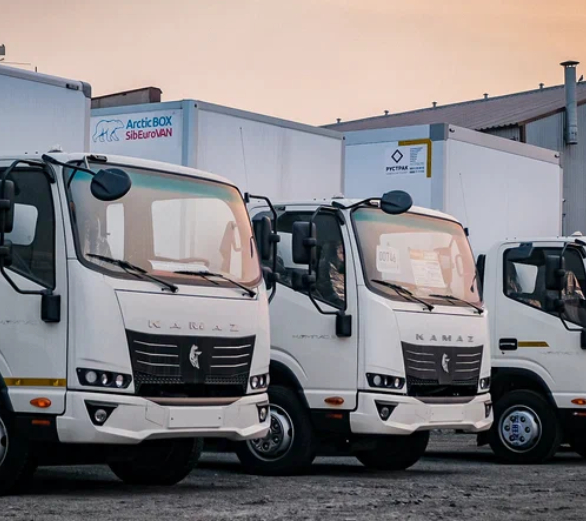
Commercial auto insurance covers vehicles used in the business. For contractors, that may include pickup trucks, vans, service vehicles, or other automobiles used to move workers, tools, and materials between locations.
This policy includes liability coverage for bodily injury and property damage you cause in an accident. It can also include physical damage coverage for the business vehicle itself. Collision coverage applies when the vehicle is damaged in a crash. Comprehensive coverage can help pay for damage to your business vehicle from events other than a collision, such as theft, vandalism, fire, or certain weather-related damage.
Auto insurance is mandatory in the state of California, and this extends to commercial auto insurance. California law requires any vehicle used for business, hire, or profit to carry a commercial auto insurance policy. As of January 1, 2025, the state minimum liability limits are:
These are standard minimum liability limits. Certain commercial vehicles and operations may require higher limits. Commercial vehicle registration requirements also depend on the vehicle’s type, weight, and use.
A commercial auto policy may cost more than a personal auto policy because business use can involve different risks and coverage needs. Your price depends on factors such as the vehicles you insure, how they are used, who drives them, and the coverage limits you choose.

Builder’s risk insurance protects buildings and structures while construction is still in progress. In California, it can help cover damage to a structure under construction from causes such as fire, lightning, explosion, vandalism, theft, and certain weather events.
Builder’s risk is not required for every project by California law, but a contract or lender may require it before work begins. Builder’s risk insurance focuses on the project property itself during the construction phase. This can include:
Inland marine insurance is a broad category of property insurance generally covering loss to movable property or unusual risks. For contractors, inland marine insurance is used to cover tools, equipment, materials, or other business property while those items are in transit or stored away from the main business location.
Although it is not required by law, inland marine insurance is useful for contractors who move valuable property between jobsites or keep materials and equipment at temporary locations. Theft, collision, and accidental damage during transit are among the losses this policy may help cover.


Commercial umbrella insurance gives a contractor extra liability protection after the limits of certain other insurance policies have been reached. If a large claim goes past the limit of general liability, commercial auto liability, or employer’s liability coverage, umbrella insurance may help absorb the amount above that limit, up to the umbrella policy maximum. Umbrella insurance is not mandatory for every contractor, but it may be required for larger projects or contracts that specify higher liability limits.
For a contractor, this extra layer can be valuable on larger jobs. A serious injury claim, major vehicle loss, or large property damage case can rise well past the limit carried on the primary policy, which can jeopardize a company’s financial stability.
The right insurance for your contracting business depends on the work, employees, vehicles, subcontractors, and contracts requirements. Contractors Liability can help you find insurance for your specific business needs.
If you want to get the best coverage now, from the best carriers and at the lowest price, call us at (888) 973-0016 or click for a free quote. Our team can answer your questions and help you determine what coverage your California contracting business may need.
Get answers to your most common questions from Contractors Liability
There is no single insurance policy required for every contractor. Workers’ compensation is generally required for businesses with employees, vehicles must meet state financial responsibility requirements, and licensed contractors generally need a contractor license bond.
Cost varies on your type of work, revenue, payroll, trade class, subcontractor use, claims history, location, and limits. In the general liability estimates above, annual premiums range from $875 to $17,800 across the revenue levels shown.
Liability insurance for contractors can help cover certain claims involving bodily injury, property damage, and related legal costs. General liability insurance is commonly used to protect against third-party claims arising from a contractor’s work or business operations. For example, it may help cover a claim if a contractor accidentally damages a client’s property during a job.
In California, businesses with employees are required to carry workers’ compensation insurance. Certain CSLB classifications, including roofing, must maintain coverage even without employees. Operating without required coverage can result in penalties and license suspension.
Start by providing information about your contracting business, the work you perform, your revenue, and your insurance needs. You can also call (888) 973-0016 for assistance.