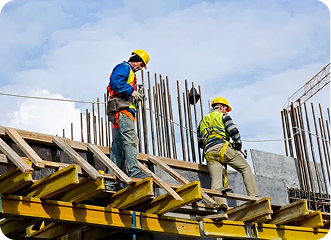
General liability insurance covers third-party bodily injury, property damage and advertising injury claims that arise from contracting work, along with the legal defense costs that come with them. Contractor policies commonly carry $1 million per occurrence and $2 million aggregate limits, the amounts general contractors, cities and landlords usually require on a certificate of insurance.
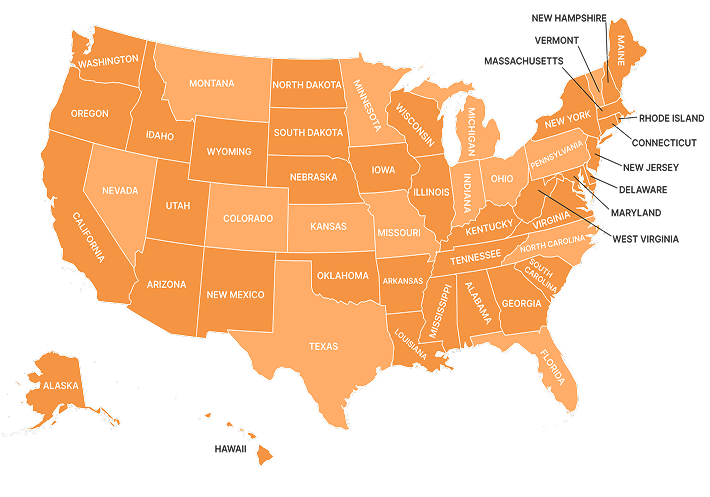
Contractors Liability quotes coverage in all 50 states from A-rated carriers, and same-day coverage is often available.

General Liability Insurance protects contractors from claims made by clients or third parties for damages caused by the contractor or their employees. Despite best efforts to ensure safety, accidents can still occur, making this type of coverage essential.
As a contractor, you work hard to maintain a safe job site and protect your reputation. However, even the most cautious businesses can experience unforeseen incidents. That’s where General Liability Insurance comes in, offering protection for your business, assets, and yourself.
This insurance is often mandatory in most states, ensuring you’re covered for potential liabilities without overpaying. ContractorsLiability.com specializes in providing affordable and reliable General Liability Insurance to keep your business safe.

Protects against claims of injury caused by your business operations or products.
Example: While installing flooring, someone trips over your tools and is injured.
Protects against claims such as libel, slander, or misuse of client images.
Example: Using a client’s home in your marketing materials without permission could lead to a lawsuit.
Covers medical expenses if someone is injured on your business premises.
Example: A client falls and injures themselves while visiting your office.
Covers damage to a client’s or third party’s property.
Example: An employee accidentally damages a client’s vehicle while installing a garage door.
Protects against claims for damage to rented property due to specific incidents.
Example: A propane tank leak from your roofing business causes a fire in a rented building.
Helps protect your business if you’re accused of infringing copyrights or making advertising errors.
Example: You use a brand name in an ad without proper authorization, leading to a claim.
Talk to a real agent, not a voicemail. Certificates of insurance in under 4 hours, with bilingual support every day of the year.

If your business provides advice or professional services, errors or omissions are not covered. For that, you’ll need Errors and Omissions Insurance (also known as Professional Liability Insurance) to protect against claims stemming from advice or recommendations you give.
General Liability Insurance does not cover accidents involving your business vehicles. For that, you’ll need Commercial Auto Insurance to protect against vehicle-related claims.
Most General Liability policies do not cover punitive damages, which are financial penalties in lawsuits intended to punish the defendant.
Damages resulting from intentional actions, such as an employee deliberately damaging property, are not covered by General Liability Insurance.
Faulty workmanship or poor-quality work, often referred to as the “workmanship” or “warranty” exclusion, is not covered. For example, if the paint you applied starts peeling due to improper preparation, this would not be protected by General Liability Insurance.
Is the cheapest General Liability Insurance for contractors always the best?
The cheapest General Liability Insurance for contractors can be perfect for your needs and your wallet. There is no reason to purchase expensive policies or ones that are not suitable to your needs, preferences, and budget.
General liability insurance is for any contractor whose work brings them into contact with other people, other people’s property or the public. That includes general contractors, carpenters, concrete contractors, drywall installers, electricians, excavators, handymen, HVAC contractors, plumbers and roofers.
You need a policy if a general contractor, a city permit office, a landlord or a state licensing board asks you for a certificate of insurance, if you bid on commercial or residential jobs, or if you hire subcontractors whose work you could be held responsible for. A sole proprietor with no employees needs it as much as a crew of twenty, because the size of a third-party injury claim is not scaled to the size of the business.

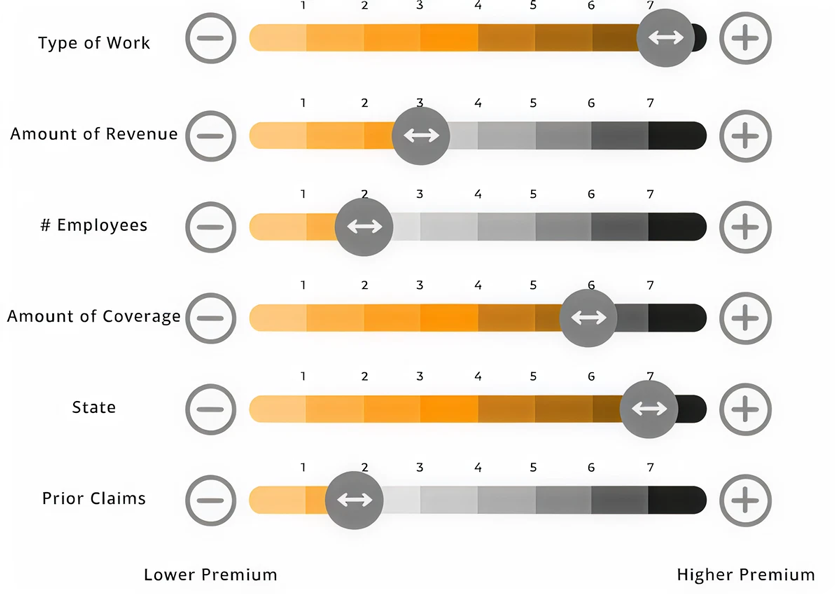
General liability insurance for contractors is priced on six things: the trade you perform, your annual revenue, your payroll and employee count, the limits you request, the state you work in and your claims history. A low-risk trade such as painting or handyman work with no employees sits at the bottom of the range. Roofing, framing and excavation sit at the top, because the severity of a claim is higher, not because the paperwork is different. Contractors Liability quotes the same set of exposures across multiple A-rated carriers so the numbers can be compared before anything is bound.
Once you have purchased a General Contractors General Liability Insurance policy different people or companies may ask you to have them named as additional insured’s on your policy.
The most common requests are from clients who you are doing work for, Cities that you are working in, and landlords to make sure you have coverage as required by any lease you may have. If you will anticipate you will need a number of Certificates of Insurance to be issued you should consider adding a blanket additional insured endorsement to your policy.
This is sometimes included in policies or there maybe an additional charge for this endorsement. The blanket additional insured allows you to add as many clients as you need to your General liability Insurance Policy.
It also offers coverage as long as you have a contractual relationship with a client whether or not a certificate is issued specifically to them. This is especially important if you deal with a large number of certificate request as the chances of making a mistake is great. With the blanket endorsement you are covered.

The most common types of additional insured forms are listed below. They are reference by their ACORD form number. The acronym “ACORD” stands for Association for Cooperative Operations Research and Development. These are standard insurance forms used in the insurance industry:

In the last few years, insurance carriers are regularly adding the CG 22 94 endorsements to the commercial general liability policy to exclude losses arising out of subcontractor-caused damage to a contractor’s work. The theory behind the CG 22 94 endorsements is that the damage caused by a subcontractor’s work should be the responsibility of the General Contractor as a business loss and not a loss covered by the General Contractors General Liability Insurance Policy.
A number of General Liability carriers that insure home builders and remodelers have added this exclusion. As a result, this exclusion results in a substantial reduction in coverage as compared to prior policies.

The CG 2037 contains the same limitations and conditions as the CG 2010. It differs in that this endorsement insures the additional insured for completed operations of the contractor and not ongoing operations. This endorsement supplements the CG 2010. As a result, if an additional insured requires additional insured status for the project, the contractor will need both the CG 2010 and the CG 2037 endorsements in order to comply.
There are a number of options you have available to you to get around this exclusion:

It actually is very simple a 1099 is an IRS form that businesses pay non employee compensation to any third party. This by definition makes anyone who receives money that is classified as 1099 income not an employee of the party issuing the 1099. However, just saying someone is a 1099 and not an employee does not make it so.
If to the IRS it walks like a duck and quacks like a duck even if you call it a chicken, they can reclassify the payee 1099 as a W-2 employee. This can result in massive tax liability. So why do contractors try to get away with this? Well, there are 2 main reasons. First if a worker is 1099, the contractor is not responsible for paying employment taxes as they would with a W-2 employee.
The second reason is that for worker’s compensation insurance any money paid on a 1099 is not considered payroll thereby reducing Worker’s Compensation costs. If a contractor is working with Independent Contractors and Subcontractors they must get certificates of insurance from these workers. If they fail to get a certificate they will be treated as uninsured subcontractors on the General Contractors General Liability Insurance Policy.
As a result, any amount paid will be added back to your income for premium purposes. The same goes for Worker’s Compensation Insurance. Also with Worker’s Compensation if someone you 1099 is injured there is a good chance a smart lawyer may make the claim that the injured party was actually an employee. If the court rules they were you could be on the hook for a lot of money.
No, injuries to your employees are not covered by General Liability Insurance. Employee injuries are handled through Workers’ Compensation Insurance. For example, if an employee falls from a ladder, General Liability won’t cover the medical costs or lost wages.
No, professional mistakes or errors in advice are not covered. For this, you’ll need Errors and Omissions Insurance (Professional Liability Insurance) to protect your business from claims related to advice, recommendations, or professional services.
No, General Liability Insurance does not cover vehicle-related incidents. You need Commercial Auto Insurance for protection in case of accidents involving business vehicles.
Typically, no. General Liability policies usually do not cover punitive damages, which are fines imposed by the court to punish intentional misconduct.
Intentional acts, such as an employee purposely damaging a client’s property, are not covered by General Liability Insurance. These are excluded because they are not accidental.
No, poor workmanship or faulty work is not covered. This is referred to as the workmanship or warranty exclusion. For instance, if you use the wrong materials and the work deteriorates, this would not be covered by General Liability Insurance.

Just read and in 30 minutes you will know everything about insurance.